Vascular access is one of healthcare’s most common procedures — and one of its most underestimated challenges.
– Keano Venner
Vascular access is everywhere in modern healthcare.
It is required for blood draws, IV medication, emergency treatment, diagnostics, surgery, intensive care, and routine clinical workflows. Every day, care teams rely on fast and reliable access to the bloodstream to diagnose, treat, monitor, and stabilize patients.
Because the procedure is so common, its complexity is often underestimated.
But for many patients, vascular access is anything but simple.
A routine procedure with real complexity
Finding a suitable vein can be difficult — especially in patients whose veins are hard to locate, fragile, collapsed, or deeply positioned.
This can affect many patient groups, including:
- Children
- Elderly patients
- Oncology patients
- Emergency cases
- Patients with obesity or difficult vein conditions
When access is not successful on the first attempt, the impact reaches far beyond the technical procedure.
Failed attempts can lead to pain, bruising, anxiety, delayed treatment, and reduced patient confidence. A procedure that should feel routine can quickly become stressful — for both the patient and the person performing it.
Pressure on healthcare professionals
For healthcare professionals, difficult venous access creates additional pressure.
In urgent settings, every minute matters. In high-volume environments, every repeated attempt costs time. In understaffed systems, every inefficient process adds to the workload.
This is especially relevant in emergency medicine, where speed and reliability are critical. A delayed IV line can affect treatment timing and create additional complexity in situations where teams are already working under pressure.
In hospitals and outpatient settings, repeated puncture attempts can slow down workflows, bind staff capacity, and consume resources that are needed elsewhere.
An overlooked bottleneck in care delivery
As healthcare systems face staff shortages, rising patient volumes, and increasing operational pressure, standardized support tools become more important.
HEMˣ focuses on one of the most overlooked bottlenecks in care delivery:
Reliable access to the bloodstream.
The challenge is not only to find a vein. It is to make the process more consistent, reproducible, and less dependent on visibility, experience, and situational conditions.
Supporting consistency in blood access
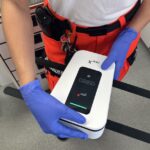
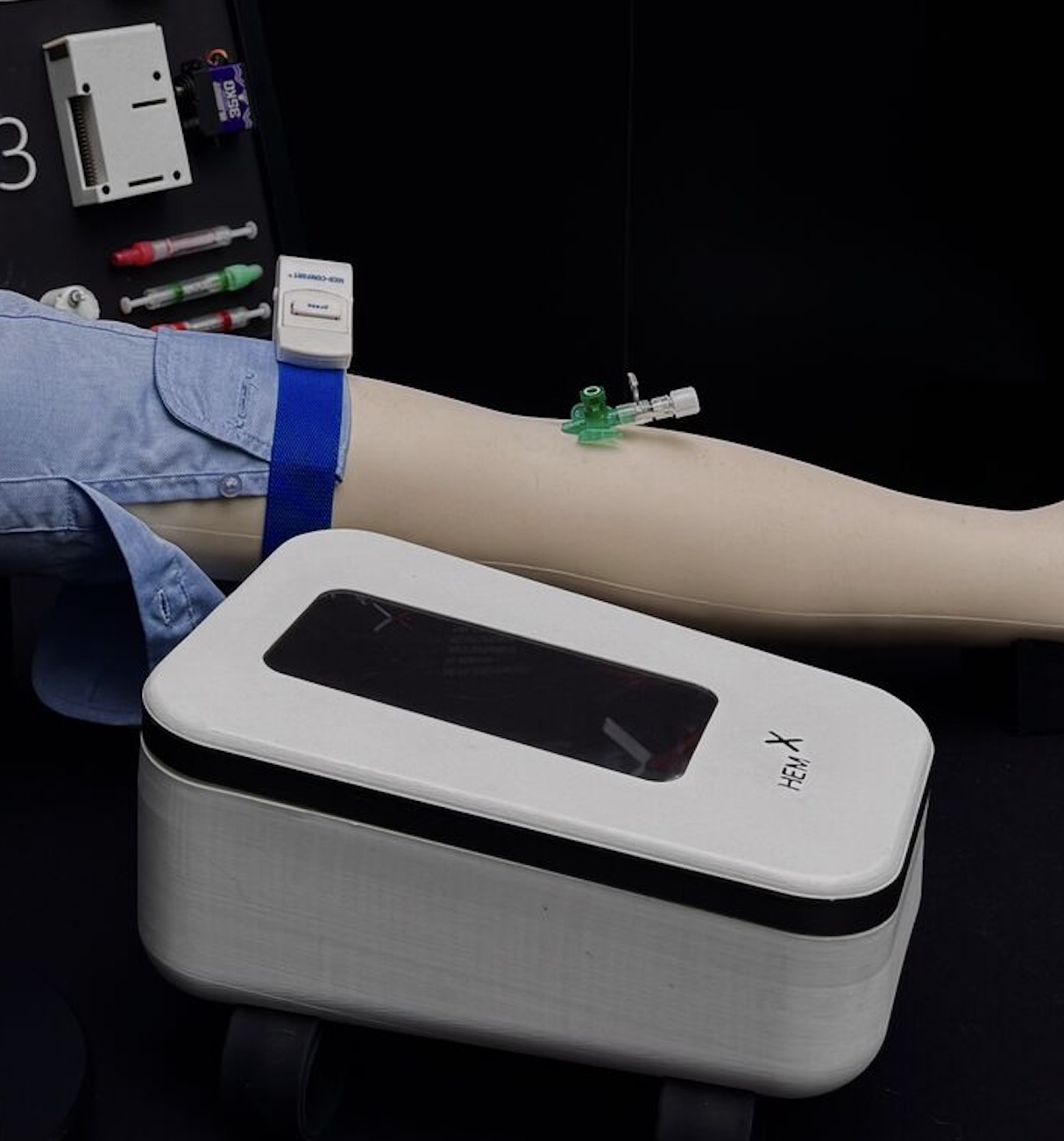
HEMˣ is being developed to support vein detection and controlled puncture guidance.
The goal is to help reduce unnecessary failed attempts and bring more consistency into one of healthcare’s most frequent procedures. By combining imaging, intelligent vein evaluation, and mechanical guidance, HEMˣ aims to support healthcare professionals in situations where precision matters.
This is not about replacing clinical judgment.
It is about supporting care teams with a tool designed to reduce variability, improve confidence, and make everyday blood access more reliable.
Beyond technical automation
The broader vision behind HEMˣ is not just technical automation.
It is better patient experience.
Lower staff burden.
More efficient clinical workflows.
More confidence in a procedure that healthcare systems depend on every day.
Vascular access may be routine, but its impact is systemic.
When blood access becomes more reliable, patients benefit. Care teams benefit. Workflows benefit.
That is why vascular access matters — and why HEMˣ is focused on making it more precise, consistent, and patient-friendly.